Showing posts with label Orcs. Show all posts

Saturday, August 29, 2020

Story Fragment: An Orc's Luck

This story fragment is meant as an addendum to my Another Approach to Orcs post, giving an example of what I imagine an orc to be like. It's not the primary focus, but I think it comes through.

--------------

In the southeastern reaches of the continent, where the winds slough off the glaciers and carry storms of ice to shore, there is a mountain the locals call Ar Merosha. It draws up gently from the northern plains, smooth and deceptive in slope, for mile after mile, before culminating in a terrible, squat spire of naked stone. No peak in sight challenges it. Ar Merosha's ugly face cows them, and the people who dwell in stone-dug apartments sheltered by thick curtains and coats of cowhide, into submission.

Fantasy Mountain | Dawn of the Knight Blog
Source

The plainspeople migrate to the mountain in spring and emigrate in autumn, like a steady tide splashing the rocks. The apartments are built to house many more than today inhabit the mountain, even at the summer solstice, many more people than live today in the plains beneath Ar Merosha. So they bring everything, their wealth, their animals, their reserves of grain and vegetables to the mountain each spring, and there is no shortage of room. There are stores for the grain and pens for the animals and retreats for the ascetics and great open caverns for the young men and women of the plains who dance raucously to the fiddle and wrestle under the noonday sun and marry each other where the mountain is blind to their joy, and there are new homes for them and their families too. There are aeries for the gold-breasted thrush, which follows the plainspeople in their migration and which they believe is lucky, and there are nooks for the pale-faced eagle, which does the same and is not. There are even wind-blasted caverns inhabited by the orcs, which the plainspeople are always careful to keep out but which make it inside nevertheless.

All these leave the mountain when the plains below turn golden and needles of ice coat the roads in the morning. They take with them the bounty and plenty of the solstice, and the stone apartments sit nearly empty again. Only a rare few remain, to guard the upper passes and conduct the rites of the winter solstice. It is a formality, they know. Nobody travels the upper passes, which lead only to Ar Merosha and so lead not only to a dishonorable death, but a stupid one; and few today believe that the rites are necessary. Whatever dwells about the mountain has no interest in descending from its perch, and knows it would not be welcome if it did.

These few gather all together on the night on the winter solstice, and stay up till sunrise, then sleep clear past lunchtime. Only a handful are needed to fill the old posts: one to guard the pass up, one to guard the way down, and some earnest and hardy folk to keep safe the elders. Only, this year would be different, and there were three reasons why.

The first was that Kimrah, who was to guard the upper pass, traded her sacred post to an orc, furnishing the foul creature with an old leg of mutton. She did this so that she could spend the night in the lower post with the eldest grandson of the old magus, who fascinated her. She was long in arm and strong, strong enough to wrestle the orc to the ground if need be, and skilled enough to pin it securely. And she was clever, otherwise she would not have taken so quickly to the magic which the magus' grandson had whispered to her, and with the bribe of mutton she cast a curse on the orc, so that if it abandoned the post it would lose every drop of luck it had jealously gathered. She made only one mistake; she had assumed the orc valued such a thing, or anything, which was invisible and intangible.

The second was that, in that year, the reavings of the wolf-riders to the north had been few and light. With so much peace and safety about the plains, almost nobody had stayed in the mountain. But a company of strangers had arrived, mercenaries who had made the long trek in the spring from faraway places to make a fortune fighting the wolf-riders and had been left disappointed. Between making the journey home in winter or making some profit by guarding the elders, they chose the latter option. Among them were a pair of campaigning veterans from the armies of rival nations, a devotee of a foreign god with enough good sense to shut his mouth, a learned scholar who politely interviewed the elders for a travelogue she was writing, and several shifty-seeming folk who stuck hard to the heels of their patrons and dreamed of returning to their boring lives in another land. 

The third reason was that the leaders of the adventuring company and the orc matched one another for ambition and avarice. The company had relieved from the bloody hands of a fellow treasure seeker a tablet which detailed an ancient treasure hidden in the heart of the mountain, and the defenses within. The orc had dared a winter jaunt up the mountain pass years ago, and found the outline of a great door cut into the cliffside. The two schemed, and ensured Kimrah would be away from her post that night. 

So at sunset on the solstice, when the elders settled within for the long night, the company ventured out with hooded lanterns. A blizzard rose up from the plains as they passed the upper post and joined the orc. Any of the plainspeople would have run screaming from the omens that night. The croak of a pale-faced eagle followed the company the whole way. The orc swore constantly, damning the pebble in its boot and its stomachache and its soiled underclothes. No local swore outdoors if they could avoid it, let alone in the direction of the mountain, lest their curses carry on the wind and awake the winged demons under the snow there. It did not care, and the company was too ignorant of the local customs to be alarmed. 

They trudged up the sleet-slicked passes in silence. It was necessary to focus oneself entirely on the task of putting one foot in front of the other, or else one would slip, and getting back up would require two more pairs of hands. If the pass had been exposed to the mountainside, they would all surely have fallen to the crags below.

The orc led them up and down the spidery network of mountain passes, and the company despaired of ever making it back down without its help. Then, as the blizzard grew fearsome and threatened to blow out their lights, the orc exclaimed aloud and pointed to the doorway. 

A sheer, flat wall of stone was recessed into the mountainside. There were no markings, no handle, no lock. Only a hairline-thin fracture was visible in the rough shape of a great door. The company, already fatigued and exasperated with the creature, turned on it, accusing it of bringing them up the mountain for nothing. The scholar quieted them all, and continued her examination in the roaring blizzard. Then she stepped back and gave the order to break the door down. One of the soldiers held up a great sledgehammer, and bolstered by the acolyte's spell, he struck the stone with mighty blows, drowning out the blizzard. With each strike, the hairline fracture widened, and soon came open entirely. The stone fell away, and the company stood below an arch, wide enough for an oxcart and tall enough for a giant to stoop beneath it.

The adventurers and their torches found shelter from the buffeting winds. A sense of relief flooded over them, momentarily safe from the storm and no longer having to look upon the ugly face of Ar Merosha. But their relief was mistaken; they stood in the heart of the mountain, and their luck was running out swiftly.

--------------

Like what you read here? Be sure to leave a comment below and follow the blog to see new updates. As always, thank you for reading, and have a lovely week.

Thursday, August 27, 2020

Another Approach to Orcs

Ah, the humble orc. The HD 1 fodder enemy par excellence. What to do with them?

I'll be honest. I have a mostly secondhand understanding of Tolkien. I read The Hobbit at a young age, but it never grabbed me. I've never watched the Lord of the Rings Movies, and I've had the Fellowship of the Ring audiobook sitting on my phone for over a year without making it to the Prancing Pony. So I have no strong image of what an orc 'is' from literature. 

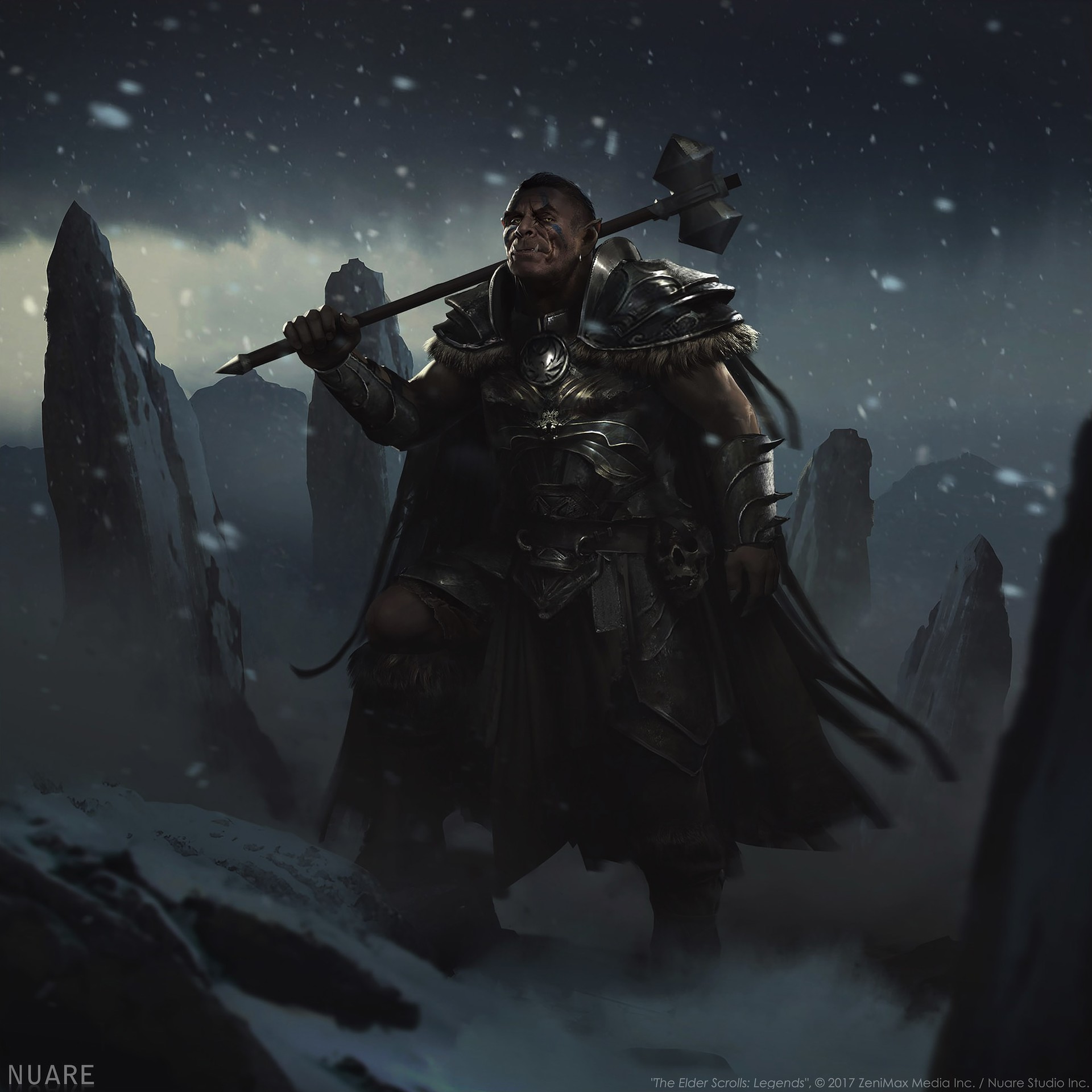
ArtStation - Orcs, Nuare Studio
Very nice, but not what I'm looking for

My real touchstone for orcs is the Elder Scrolls series, which was itself inspired by someone's homebrew 2e game. In that series, orcs began as low-level enemies, and only in the third game, Morrowind, did they become a playable/NPC race. The Tamrielic orc is interesting, and gives the race a neat treatment, canonizing the 'corrupted elves' idea from Tolkien while adding some complexity to the story and making them viable characters. Still, it's not what I want in my games.

Being a relatively new GM, I've actually never had orcs in any of my games either (except for the bohemian orcs at the end of my Elder Scrolls GLOG playtest, which were only used as NPCs). 

Honestly, I have no personal attachment to orcs. Or goblins for that matter. No particular reason to use them if I were to make my own campaign world. So why am I even thinking about them?

Partly because James of the Grognardia blog (that is not dead which may eternal lie!) just wrote about them. I quote:

OD&D orcs are the kinds of nasty brutes you'd find cowed into service by an evil magician or dark knight or even a dragon, while AD&D orcs are a parallel human race, albeit an irredeemably evil one. That is, AD&D orcs have an existence apart from whom they serve, which makes it far easier to believe they have a unique society and culture of their own. OD&D, it seems to me, suggests that a race of ready-made minions akin to Maleficent's twisted goons from Disney's Sleeping Beauty.

These days, I find myself preferring monstrous monsters over more nuanced and naturalistic humanoids, so OD&D rings my bell far better than does AD&D.

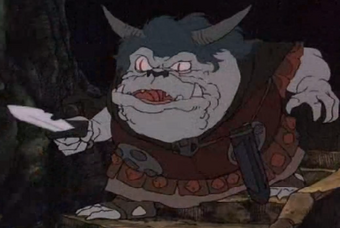
Orc | The Lord of the Rings Animated Wiki | Fandom 

I also just came across this Tolkien quote, from a letter to Christopher during WW2:

Yes, I think the orcs as real a creation as anything in ‘realistic’ fiction … only in real life they are on both sides, of course. For ‘romance’ has grown out of ‘allegory’, and its wars are still derived from the ‘inner war’ of allegory in which good is on one side and various modes of badness on the other. In real (exterior) life men are on both sides: which means a motley alliance of orcs, beasts, demons, plain naturally honest men, and angels.

Keeping in mind that Tolkien's conception of orcs and backstory for them was never canonically decided (I may not have read the books, but I've dug through more secondary material than I care to mention), this image speaks much more strongly to me than anything in The Hobbit, or the Forgotten Realms.

It's, dare I say it, fantastic. I picture ugly, tusked men hunkered in an Allied trench, packed side by side with ordinary humans, with savage warbeasts and bound demons, facing down a similar lineup on the other side of no-man's land. Rifle butts etched with crude Goblinish innuendo and pictures. 'Kilroy was here' graffiti marking a swath across Europe... that one's actually the same as in our world.

That's kind of the point. Stories of good vs evil, myths that orcs traditionally feature in, are an externalization of an internal struggle: ordinary people wrestle with their inner demons, and we tell stories about great warriors battling literal demons for inspiration. In the real world, it's rare to see a conflict with such a clear delineation of morality, and so the figure of the orc falls a bit flat. 

You can try to make the orc more complicated, as AD&D did, by introducing orc babies and the possibility of redemption, but then you cut against the original purpose of the orc. You can use them as an allegory for an external conflict, but there's not many places that it fits. Maybe you could do 'WW2 except the Nazis are orcs', but even then I can't imagine it being very good. I might just be remembering Bright and tarring everything with that brush, but that film has probably poisoned the well as far as 'complex orc characters' go for a decade or so.

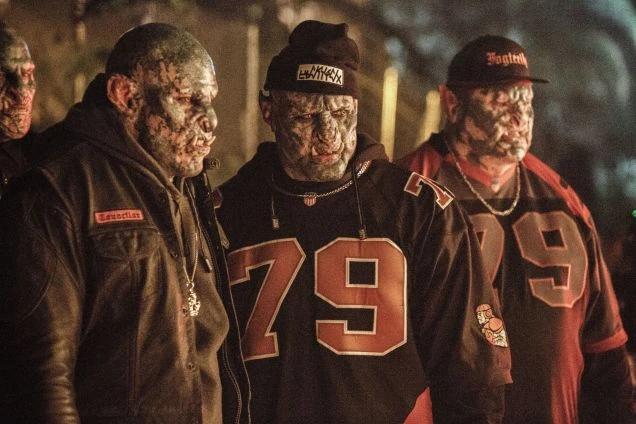
Orc | Bright Wiki | Fandom
Pictured: a monstrosity and an abomination

What am I proposing as an alternative? 

Going back to James' quote, I like the mythic understanding of orcs and the OD&D approach to orcs as monsters rather than 'humanoids.' But I'm also grabbed by the image from Tolkien's letter. Orcs fighting side by side with humans. Not just evil humans either. Orcs representing the worst of humanity, the very cruelest, most flippant and wicked, while still being able to barely function in a civilization. 

Take the very worst person you know. In particular, those who are horrible while managing to avoid being cast out of society entirely. Now turn those qualities up to 11. That's an orc.

Orcs form stable social groups among themselves, adapting to the local human expectation. Are the local humans nomadic shepherds? Are they hunter-gatherers? Sedentary city-folk? Orcs who live in the area, or are coming into it, will imitate their social structures. 

Life among the orcs is a perversion of life among the local humans. Human vices are their norm, and human virtues are absent. Orcish bands living near humans will always be pushing the line on their behavior, then backing away once they've gone too far. Any human forced by necessity to live among the orcs will find it nightmarish - but just marginally better than roughing it out and trying to make it on their own. Cruel or not, organized groups are excellent force and survival multipliers. 

Obviously, no human village or city wants an orc encampment nearby. But it's not always worthwhile, or justifiable, to expend effort to drive them out. Orcs will always be just one more offense, one more scandal or disruption away from getting a pogrom. They may be ignorant, foolish and boorish creatures, but they're smart enough to know where that line is, and how to get close without crossing it.

Ralph Bakshi on | Ralph bakshi, Illustration artwork, Art

And sometimes, the people will need the orcs. Wartime comes and the baron's men are coming in to press new recruits. They'll never take an orc when they could take a human - they're stinky, bad for morale and barley follow orders - but will they take twelve orcs rather than ten men? Thirteen? In spite of their vices, they do make good fodder and shock troops.

All the more if there's an invasion. Orcs don't have much to plunder, usually. Those dungeon orcs with treasure are guarding someone else's stuff, and they're terrible with money. Bandits or invaders don't usually bother with them.

So, if there aren't any plucky adventurer types nearby to rescue you, how much will you offer the local orcs to help defend your town? 

It's obviously a bad idea. You know they'll push their luck, ask for outlandish sums of money or things you can't possibly give them. But are you willing to risk not getting their help at all? Worse, are you willing to bet that the invaders or bandits won't want to recruit them, or outbid you? Orcs will absolutely sell you out and switch sides if offered so much as an extra silver piece.

Orcs are the things you would obviously be much better off without; but they're here and you've got to deal with the fuckers somehow.

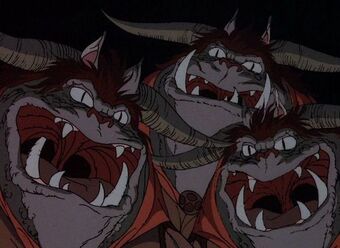
Orc | The Lord of the Rings Animated Wiki | Fandom

Nobody will blame you for putting a bounty on orc ears, though they may disagree that it's a good way to spend your money. It's also not unheard of for orcs to cut off each other's ears and offer them to unscrupulous adventurers to get the locals off their backs and split the reward. 

And, of course, there's the orcs in service to a dark magician or anti-cleric or chaotic warrior or somesuch. As soon as somebody with enough personal strength and coordination comes around offering a home if only they kill the pesky humans, they'll toady up to the new dark lord, at least as long as their chances look even. Sometimes this role is filled by an especially strong or unusually smart orc, but that's rarer. 

Yes, it's horrible whenever the new dark lord rises up and orcs come out of the woodwork to burn and pillage; but it's at least possible to buy them off or intimidate them. And if you can convince the local duke to march against this new foe, there's a strong chance there'll be an orcish battalion wearing his colors against their own.

Orcs. They're the worst. But you can't just ignore them, and one of these days you might just end up in a foxhole with an orc, or you might be wandering the mountain half starved when you see a fire in the distance and hear goblinish drinking songs on the wind. Now what?